
Kevin Vazquez is a staff attorney at the International Brotherhood of Teamsters. He graduated from Harvard Law School in 2023. The opinions he expresses on this blog are his own and should not be attributed to the IBT.
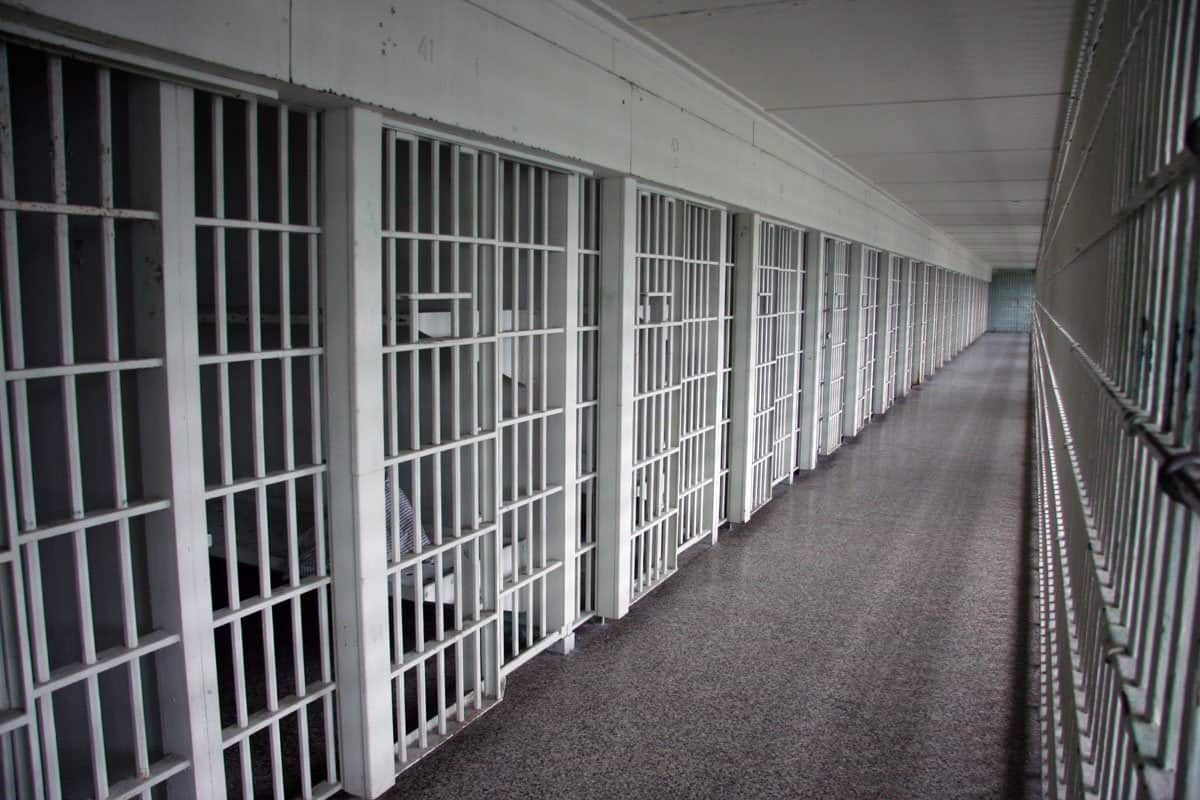
The NLRA’s remedial scheme is notoriously weak. Although Section 10(c) confers broad authority upon the Board to “take such affirmative action … as will effectuate the policies of [the] Act,” the Supreme Court has held that the Board’s remedial power is only compensatory—and not punitive—in nature. Thus, the Board’s ability to fashion remedies is largely limited to reinstatement, backpay, cease-and-desist orders, requirements that employers post notices, or, in the case of violations of Section 8(a)(5), simply orders to return to the bargaining table. Moreover, a Board order may only be enforced by petitioning a federal Court of Appeals, which, after reviewing the factual and legal basis for the Board’s decision, may decide to enforce the order or not—a process that typically takes years. Even after an Board order has been enforced by a federal court, it remains the Board’s responsibility to monitor compliance, and if the employer fails to abide by the terms of the order, the Board must return to the court and petition for a new order holding the employer in contempt, and then seek compliance with that order. The PRO Act, passed by the Democratic-controlled House in 2021, would address some of these deficiencies, but it languished in the Senate, the graveyard of labor law reform. Nonetheless, despite the current weakness of the Board’s remedial orders, the interminable length of the process, and the many opportunities for compliance, some employers have proven themselves so staggeringly intransigent—or at least so fully convinced that compliance with the NLRA is merely optional—that they can, apparently, be arrested and jailed, albeit briefly, for violation of the Act. One such rarity occurred last week, and it only took four Board motions, three orders from a federal court, and two years of deliberate defiance.
Last Wednesday, the NLRB’s Office of Public Affairs reported that the Seventh Circuit issued a “writ of body attachment” directing U.S. Marshals to take two Wisconsin spa owners into custody for failing to comply with a court-enforced Board order. The Board ruled in 2021 that the spa violated the NLRA by discharging an employee in 2020 for voicing concerns about the spa’s COVID safety protocols, and the Board ordered the spa to reinstate the employee with backpay. The Seventh Circuit enforced the Board’s order later that year. After the spa failed to comply, however, the Board filed a motion to hold the spa in contempt, which the Seventh Circuit granted in February of this year. Still, the spa’s owners refused to yield, so the Board, through General Counsel Jennifer Abruzzo, filed another motion to hold the spa owners personally in contempt and to issue a writ of body attachment against them, which the Seventh Circuit granted on September 1st. Two weeks later, on September 12th, U.S. Marshals took the owners into custody for a hearing before a magistrate judge, and, in an abrupt about-face when finally faced with the full coercive authority of the state, the owners “promptly” committed to complying with the court’s orders, two years after the court first enforced the Board’s order and more than three years after the spa’s initial violation of the NLRA.
It should not, of course, be this difficult for the Board to enforce its remedial orders, as weak as they are. Employers often all but disregard the NLRA, seemingly—and not entirely incorrectly—under the belief that they can violate the Act virtually with impunity. The Board’s limited remedial authority is one reason for this; the complicated procedural apparatus required to enforce a Board order is another; and the grinding slowness of the entire process still a third. Indeed, if Abruzzo, perhaps the most ardently pro-labor NLRB General Counsel in decades, did not take the extraordinary step of petitioning the Seventh Circuit for a writ of body attachment, it is very likely that the spa owners would still be refusing to comply with the Board’s order, more than two years after it was issued. But the NLRA’s proscriptions are not mere suggestions, and the Board’s remedial arsenal, limited as it may be, is not entirely toothless. To be sure, as has been noted on this blog before, a legislative amendment to the NLRA providing for enhanced civil penalties, such as that contemplated by the PRO Act, would do much to bolster the Board’s enforcement power and induce compliance without implicating the state’s carceral authority. Even so, if future GCs proved as aggressive as Abruzzo and brief stints in handcuffs and jail cells became more common, then maybe employers—such as Starbucks, Amazon, Trader Joe’s, Apple, Tesla, and many others—would think twice before brazenly violating the rights of their employees under the NLRA, and workers’ rights to organize and bargain collectively would become more than the hollow formalism they so often are today.






Daily News & Commentary
Start your day with our roundup of the latest labor developments. See all
March 15
A U.S. District Court issues a preliminary injunction against the Department of Veterans Affairs for terminating its collective bargaining agreement, and SEIU files a lawsuit against DHS for effectively terminating immigrant workers at Boston Logan International Airport.
March 13
Republican Senators urge changes on OSHA heat standard; OpenAI and building trades announce partnership on data center construction; forced labor investigations could lead to new tariffs
March 12
EPA terminates contract with second-largest union; Florida advances bill restricting public sector unions; Trump administration seeks Supreme Court assistance in TPS termination.
March 11
The partial government shutdown results in TSA agents losing their first full paycheck; the Fifth Circuit upholds the certification of a class of former United Airline workers who were placed on unpaid leave for declining to receive the COVID-19 vaccine for religious reasons during the pandemic; and an academic group files a lawsuit against the State Department over a policy that revokes and denies visas to noncitizens for their work in fact-checking and content moderation.
March 10
Court rules Kari Lake unlawfully led USAGM, voiding mass layoffs; Florida Senate passes bill tightening union recertification rules; Fifth Circuit revives whistleblower suit against Lockheed Martin.
March 9
6th Circuit rejects Cemex, Board may overrule precedents with two members.