
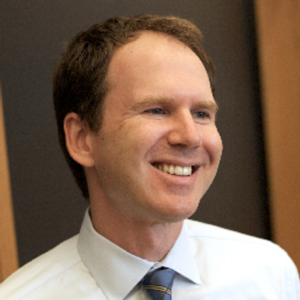
Benjamin Sachs is the Kestnbaum Professor of Labor and Industry at Harvard Law School and a leading expert in the field of labor law and labor relations. He is also faculty director of the Center for Labor and a Just Economy. Professor Sachs teaches courses in labor law, employment law, and law and social change, and his writing focuses on union organizing and unions in American politics. Prior to joining the Harvard faculty in 2008, Professor Sachs was the Joseph Goldstein Fellow at Yale Law School. From 2002-2006, he served as Assistant General Counsel of the Service Employees International Union (SEIU) in Washington, D.C. Professor Sachs graduated from Yale Law School in 1998, and served as a judicial law clerk to the Honorable Stephen Reinhardt of the United States Court of Appeals for the Ninth Circuit. His writing has appeared in the Harvard Law Review, the Yale Law Journal, the Columbia Law Review, the New York Times and elsewhere. Professor Sachs received the Yale Law School teaching award in 2007 and in 2013 received the Sacks-Freund Award for Teaching Excellence at Harvard Law School. He can be reached at [email protected].
Friedrichs is a case about fair share fees in the public sector. The question is whether the First Amendment prohibits public employers from bargaining and enforcing fair share agreements. So it was notable that one of the first questions during Monday’s oral argument – and the first question that Justice Kennedy asked petitioners’ counsel – concerned the private sector. Here’s the exchange:
Justice Kennedy: If – if you were to prevail, what would happen with private employers in a state which said that there should be an – a union shop?
Mr. Carvin: Nothing, Your Honor.
. . . .
Justice Kennedy: And – and because?
Mr. Carvin: Because the First Amendment doesn’t apply to private employers, and because in Beck the Court established the rules for agency shops based on the statute without any First Amendment –
Justice Kennedy: I think that’s correct as a basic distinction. It is true, though, assuming that you have a state statute which allows an agency shop or a – a closed shop, that that is State participation in the very kind of coerced membership and coerced speech that you’re objecting to. (Emphasis added).
Steve Greenhouse, at The Guardian, noticed this exchange and wrote:
Justice Kennedy signaled on Monday that he thought it might also be a first amendment violation for states to require private-sector workers to pay agency fees. That could open the door to a follow-up lawsuit that could be devastating to labor – one that sought to bar agency fees in the 25 non-right to work states that allow such fees in private-sector unionized workplaces.
There are at least two ways to think about what Justice Kennedy said (and both should be taken with the grain of salt that is appropriately applied to oral argument interpretations). One possibility is that Kennedy was trying to clarify that a holding for the Friedrichs petitioners would not have any bearing on private sector labor relations. In other words, that Justice Kennedy was working to cabin the implications of overruling Abood. This is a possible theory, but it doesn’t quite square with what Justice Kennedy actually said: again, that it is “true” that a law allowing agency shop agreements “is state participation in the very kind of coerced membership and coerced speech” petitioners claim is at issue in Friedrichs.
A second way to interpret Kennedy’s comment is as Greenhouse suggests: Kennedy believes that a labor law that permits agency shop agreements in the private sector constitutes “State participation” – a.k.a. state action – in coerced speech and association and thus such a law implicates (and probably violates) the First Amendment. This would mean that (on Kennedy’s view) NLRA § 8(a)(3), which allows for agency shop agreements in the private sector, is unconstitutional.
Finding state action in a labor law that permits private parties to bargain agency shop agreements would mark a dramatic departure from the Court’s state action doctrine, and seems exceedingly unlikely for this reason. In fact, petitioners’ counsel noted as much. He replied to Kennedy’s statement by saying:
Well, I don’t, in candor think that would create state action under the Court’s modern jurisprudence, such as Moose Lodge, where it turns on who is making the decision that is being objected to. In your hypothetical it would be the private employer.
In fact, if state action arises from a law that permits private parties to bargain a certain type of contract, then there’s infinitely more state action out there than is currently understood, and so a lot more room for constitutional claimsmaking. Indeed, on this view, state action could be nearly pervasive.
As to the more likely doctrinal implications of Friedrichs for the private sector, Justice Scalia’s comments toward the end of the argument are probably more relevant than Justice Kennedy’s remark. As Justice Scalia said to the Solicitor General:
[T]he problem is that [the public sector] is not the same as a private employer, that what is bargained for is, in all cases, a matter of public interest. And that changes the – that changes the situation in a way that – that may require a change of the rule. It’s one thing to provide [agency fees] for private employers. It’s another thing to provide it for the government, where every matter bargained for is a matter of public interest.
This statement from Justice Scalia portends very bad things for agency fees in the public sector. But it’s also an argument as to why Friedrichs’ damage is unlikely to extend to the private sector.


Daily News & Commentary
Start your day with our roundup of the latest labor developments. See all
March 27
“Cesar Chavez Day” renamed “Farmworkers Day” in California after investigation finds Chavez engaged in rampant sexual abuse.
March 26
Supreme Court hears oral argument in an FAA case; NLRB rules that Cemex does not impose an enforceable deadline for requesting an election; DOL proposes raising wage standards for H-1B workers.
March 25
UPS rescinded its driver buyout program; California court dismissed a whistleblower retaliation suit against Meta; EEOC announced $15 million settlement to resolve vaccine-related religious discrimination case.
March 24
The WNBPA unanimously votes to ratify the league’s new CBA; NYU professors begin striking; and a district court judge denies the government’s motion to dismiss a case challenging the Trump administration’s mass revocation of international student visas.
March 23
MSPB finds immigration judges removal protections unconstitutional, ICE deployed to airports.
March 22
Resurgence in salting among young activists; Michigan nurses strike; states experiment with policies supporting workers experiencing menopause.