
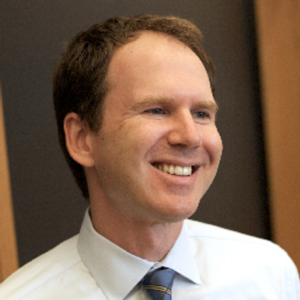
Benjamin Sachs is the Kestnbaum Professor of Labor and Industry at Harvard Law School and a leading expert in the field of labor law and labor relations. He is also faculty director of the Center for Labor and a Just Economy. Professor Sachs teaches courses in labor law, employment law, and law and social change, and his writing focuses on union organizing and unions in American politics. Prior to joining the Harvard faculty in 2008, Professor Sachs was the Joseph Goldstein Fellow at Yale Law School. From 2002-2006, he served as Assistant General Counsel of the Service Employees International Union (SEIU) in Washington, D.C. Professor Sachs graduated from Yale Law School in 1998, and served as a judicial law clerk to the Honorable Stephen Reinhardt of the United States Court of Appeals for the Ninth Circuit. His writing has appeared in the Harvard Law Review, the Yale Law Journal, the Columbia Law Review, the New York Times and elsewhere. Professor Sachs received the Yale Law School teaching award in 2007 and in 2013 received the Sacks-Freund Award for Teaching Excellence at Harvard Law School. He can be reached at [email protected].
Douglas Williams has a great post up on Talking Union that critiques my Unbundled Union essay. William’s post is definitely worth a read.
A few very quick points. One, it’s worth saying, as Williams does, that my proposal for “political unions” is meant as a means to mitigate the representational inequality – that is, the political inequality – that lower- and middle-income Americans currently suffer. Whether or not workers who join political unions would embrace the traditional goals of the labor movement, increasing their political voice would be a victory for political equality. Two, the argument in the Essay is not that management wouldn’t oppose political unions; sometimes it would. Williams notes that management is more likely to oppose political unions if those unions push for economic goals, but, even so, such opposition would be less intense than is opposition to collective bargaining unions (for reasons the Essay explains). More importantly, the existence of opposition to progressive economic policy does not imply that political unions could never secure economic policy goals. The examples the Essay gives of contemporary union efforts that resemble political unionism – SEIU Local 880’s homecare campaigns, to take one – involved explicitly economic goals. Three, and related, Williams reads me as arguing that things like paid sick leave are “anti-competitive.” The argument in the Essay, though, is that this is true to the extent that paid sick leave is required of some firms in a market but not others. Because a paid sick leave law would sweep in far more firms than a collective bargaining agreement, the sick leave law will be less likely than the CBA to disadvantage some firms vis-a-vis others, and thus less likely to inspire opposition. Finally, as Williams also notes, my argument “does not imply that workers should not also have a collective voice in the workplace” and “the proposal . . . is meant as a complement to, rather than a substitute for, efforts to rethink collective economic representation at work.”
You can find my Yale Law Journal Essay here, and the NYT op-ed version (“A New Kind of Union”) here.





Daily News & Commentary
Start your day with our roundup of the latest labor developments. See all
October 16
Department of Labor reduces wage-and-hour enforcement at unionized workplaces; Fain's victory poses question of federal monitor's extension.
October 15
New reporting examines the rollback of child labor protections; California tries to block a strike; NLRB charges Wisconsin mental health provider with firing workers during union drive.
October 14
Eleventh Circuit overturns ERISA exhaustion rule; DHS finalizes removal of automatic renewal for work permits; AFGE challenges SSA over flexible scheduling policy.
October 13
Chicago hotel workers remain on strike; a coalition of Democratic states sues the Labor Department over canceled unemployment insurance grants; the Federal Labor Relations Authority establishes a new mediation framework for federal worker disputes.
October 12
Workers at the Obama Foundation begin organizing; MLB submits its latest collective bargaining agreement proposal; Brigham & Women's nurses postpone strike.
October 11
UAW President Shawn Fain succeeds in his reelection bid, and Spanish unions call for a general strike.