
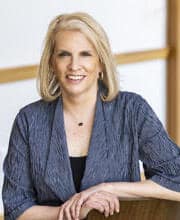
Sharon Block is a Professor of Practice and the Executive Director of the Center for Labor and a Just Economy at Harvard Law School.

Chris Lu served in the Obama administration as the Deputy Secretary of Labor, and is now a Senior Fellow at the University of Virginia Miller Center.
This post originally appeared in The Huffington Post.
As former political appointees in the Obama administration’s Labor Department, we can think of few areas where we are in agreement with Donald Trump. In fact, we have fundamental differences with him about how to build an economy that works for everyone.
Yet, we share his belief that government needs to do more to lift up American workers. If the new president is interested in delivering on his promise of creating jobs and growing wages for workers, there’s an executive order already in place that he should support.
Every year, the federal government spends hundreds of billions of dollars on procurement contracts. By some estimates, one quarter of all American workers are employed by a federal contractor — that’s millions of families whose livelihoods are connected to the federal procurement system.
In 2014, Barack Obama signed an executive order called “Fair Pay and Safe Workplaces” that was premised on two fundamental principles: doing business with the federal government is a privilege, not a right; and taxpayer money should only go to companies that are abiding by the laws that protect American workers. Under the Obama executive order, the federal government would give contracts only to companies that pay their workers the wages they’ve earned, protect the health and safety of employees, and prohibit discriminatory practices.
Donald Trump’s early interaction with the Carrier Corporation — before he was even inaugurated — affirms the core belief that companies that profit from federal contracts should help American workers. Trump implicitly threatened Carrier’s future as a government contractor because of corporate behavior that he perceived to be contrary to the best interests of its employees – namely, by moving their jobs out of the country. Judging from his tweets on the subject, Trump seems more than willing to use his new position as purchaser-in-chief to exact similar promises from other federal contractors to act in the best interest not only of their bottom line but the bottom line of American workers too.
We challenge the new president to show us that he is committed to standing up to federal contractors to deliver lasting wins for American workers – and not just looking for press-friendly sound bites. If he is serious about helping workers, Donald Trump will have a powerful tool in the federal procurement system. He could make transformational, not just anecdotal, change to ensure that all companies doing business with the federal government are good corporate citizens.
For the contracting community, the Fair Pay and Safe Workplaces executive order laid out a detailed set of principles about which labor violations would be considered and how companies could ensure they were in compliance for contracting purposes. An objective, rule-based system provides predictability to companies about their ability to secure government contracts – a far better outcome than living in fear that their business practices will draw the ire of a presidential tweet.
This week, the House will consider legislation to roll back the Fair Pay and Safe Workplaces executive order. President Trump claims that he is willing to take on corporations to advance the interests of American workers. His position on this executive order will demonstrate whether that claim is a hypocritical slogan or a real commitment to stand with American workers.




Daily News & Commentary
Start your day with our roundup of the latest labor developments. See all
October 14
Eleventh Circuit overturns ERISA exhaustion rule; DHS finalizes removal of automatic renewal for work permits; AFGE challenges SSA over flexible scheduling policy.
October 13
Chicago hotel workers remain on strike; a coalition of Democratic states sues the Labor Department over canceled unemployment insurance grants; the Federal Labor Relations Authority establishes a new mediation framework for federal worker disputes.
October 12
Workers at the Obama Foundation begin organizing; MLB submits its latest collective bargaining agreement proposal; Brigham & Women's nurses postpone strike.
October 11
UAW President Shawn Fain succeeds in his reelection bid, and Spanish unions call for a general strike.
October 9
DHS proposes a $100k fee for the foreign grad employment program; Trump suspends tech company access to green card program; and private equity perpetuates poor working conditions for home care workers.
October 8
NLRB judge finds UPS unlawfully restricted union insignia; Harvard graduate workers authorize second strike; OSHA orders Union Pacific to pay $300,000 in damages in whistleblower case.