
Maddy Joseph is a student at Harvard Law School.
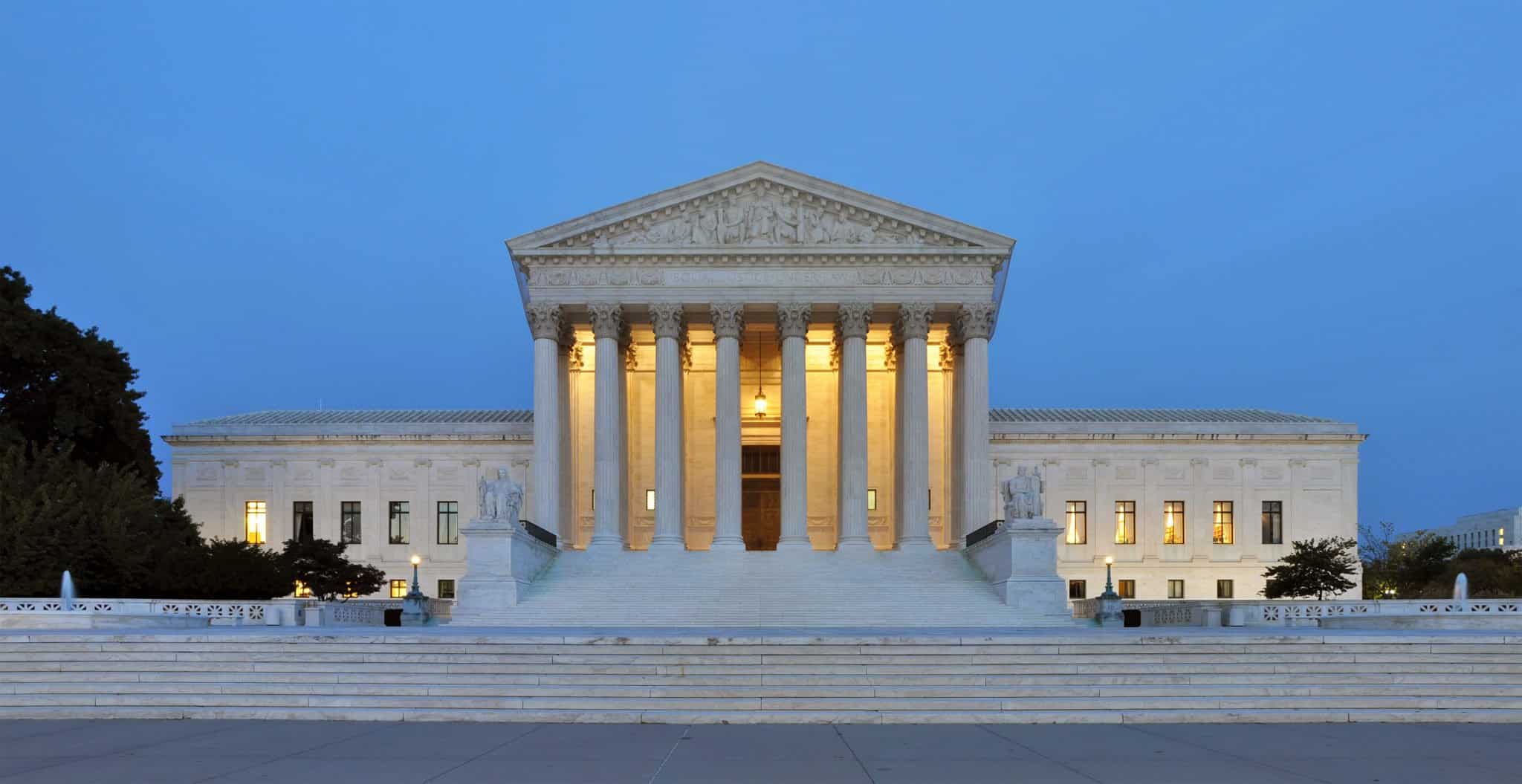
Justice Gorsuch’s silence during the Janus oral argument generated considerable buzz. Wishful (yet tentative) commentators hoped the silence was a sign that the new Justice’s originalism would lead him to uphold Abood. To be sure, Justice Thomas, the Court’s other steadfast originalist, voted with the majority in Harris. And commentators have largely assumed that both Justices will vote with Janus here. But winning over either Justice Gorsuch or Justice Thomas could be Abood’s best hope for survival.
Recognizing this, AFSCME’s brief leads with an originalist defense of agency fees. “The Founders recognized,” the union writes, “that public employees had ‘no right to object to conditions placed upon the terms of employment — including those which restricted the exercise of constitutional rights.’ Connick, 461 U.S. at 143.” And governments frequently restricted public employee speech in the “Republic’s first 150 years.” Protections emerged much later:
Only in the Warren Court era did this Court begin to depart from the original First Amendment understanding and hold that the government may not “leverage” public employment on the sacrifice of “liberties employees enjoy in their capacities as private citizens.” Garcetti, 547 U.S. at 419; see Connick, 461 U.S. at 144 (discussing cases).
Neither Petitioner’s nor the U.S.’s brief rebuts this point, leaving the originalist case against agency fees to an amicus by the Center for Constitutional Jurisprudence, an arm of the Claremont Institute. CCJ begins by alluding to two challenges to its position: not only is evidence on the intent and public meaning of the Free Speech Clause thin but the evidence that does exist indicates that the Clause was, as AFSCME argues, incredibly narrow.
CCJ draws instead on early debates about the Establishment Clause to build a case that “the founding generation intend[ed] the First Amendment to protect against compelled speech.” Recounting Jefferson’s and Madison’s reasons for opposing tax assessments in support of churches, CCJ argues that the same reasons underlie the Court’s modern compelled speech cases. Based on this link, CCJ concludes that the “beliefs of the Founders in general” — in fostering diversity in public opinion and protecting dissenters — require a holding that agency fees are unconstitutional.
Yet the most prominent originalist voices in the case, Professors Eugene Volokh and Will Baude, have filed an amicus brief in support of the respondents. Volokh and Baude take direct issue with CCJ’s evidence and, moreover, see no other originalist case against agency fees. They write:
Nor have we seen any persuasive argument that a right against compelled subsidies is supported by the original meaning of the Constitution. Although Petitioner’s amici suggest that Madison and Jefferson would have supported a prohibition on compelled speech subsidies, the only support they muster comes from the freedom of religion context. Amicus Curiae Br. of the Center for Constitutional Jurisprudence at 12; see also Abood, 431 U.S. at 234 n.31. Religious speech is different, because the Establishment Clause restricts the government from giving tax money to support religion as much as it restricts compelling private transfers supporting religion.
Volokh and Baude actually think that Abood should be overruled, just not in the direction Janus wants. Their overarching position is that no “free-standing First Amendment interest in freedom of speech or association” is “burden[ed]” when the government compels us to subsidize speech. They rely primarily on modern subsidies cases like Rust v. Sullivan and start from the basic observation that the government compels subsidies for speech all the time: “The government collects and spends tax dollars, doles out grants and subsidies to private organizations that engage in speech, and even requires private parties to pay other private parties for speech-related services—like, for example, legal representation.”
Indeed, the paragraph above is the only mention of originalism in Volokh and Baude’s brief. The dearth of evidence about the original meaning of the Free Speech Clause has always been an obstacle for originalists. “Free speech has been kind of a desert when it comes to originalism,” originalist scholar Michael McConnell put it. Robert Bork’s famous view that only political speech, narrowly defined, was protected, grew out of his recognition that “[t]he framers seem to have had no coherent theory of free speech and appear not to have been overly concerned with the subject.” Since Bork, originalist judges have been all over the map on speech rights. Justice Scalia favored broad constitutional protections for speech, but often for fidelity to precedent rather than to original meaning. In fact, the distance between original understandings and our current First Amendment jurisprudence may be the biggest obstacle to a meaningful originalist movement in this area. As a notable recent article on the subject pointed out, “modern speech doctrine, which emerged in the twentieth century, bears almost no resemblance to eighteenth-century judicial decisions. . . . If an originalist wanted First Amendment doctrine to track Founding Era judicial reasoning, the Supreme Court’s decisions in Texas v. Johnson, Boy Scouts of America v. Dale, Citizens United v. FEC, and Snyder v. Phelps, among many, many others, would likely have to go.”
This tension between precedent and original meaning is absent In Janus, however. Both precedent and original evidence support the constitutionality of agency fees. At The Originalism Blog, Michael Ramsey, another scholar, noted this after Harris: Criticizing Harris’s “background rule of no compelled funding” as lacking “founding-era support,” Ramsey argued that the responsible originalist would hold the line drawn in Abood. A rule that agency fees violate the First Amendment would shift us farther away from the anchors of precedent and original meaning.



Daily News & Commentary
Start your day with our roundup of the latest labor developments. See all
October 7
DOL scraps plan to remove decades-old wage-and-hour guidance from federal regulations; New York enacts personnel records access law; Starbucks loses bid to dismiss Workers United trademark suit.
October 6
Protect College Sports Act dampens athlete unionization outlook; Stanford RA union decides to withdraw petition
October 5
Delaware bans captive audience meetings; EEOC settles remote work national origin discrimination claim; First Circuit stays enforcement order in VA's dispute with AFGE.
October 4
Boston nurses announce open-ended strike; federal judge restores federal prison workers' union protections; St. Louis workers form the first movie theater union in Missouri.
October 2
Gov. Newsom signs bill regulating AI in workplace; federal judge blocks Trump's $100,000 H-1B visa fee.
October 1
Senate confirms Keith Sonderling as Labor Secretary; Amazon warehouse workers launch an unfair labor practice strike.